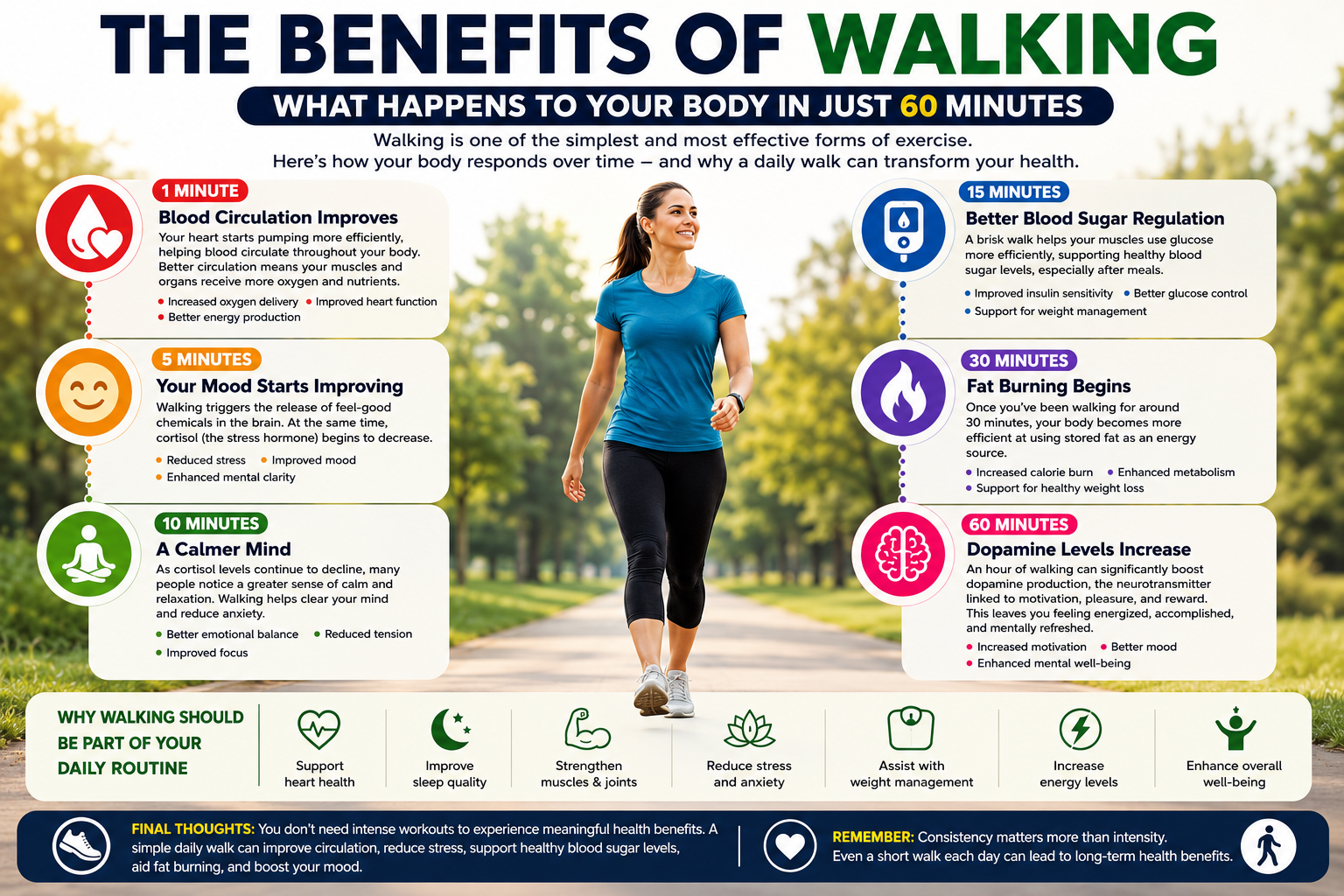
Walking: The Underrated Exercise That Transforms Your Health
Table of Contents
The Most Underrated Exercise
Walking is so simple that we often overlook its power. But the evidence is clear: regular walking is one of the most effective things you can do for your health.
A 2023 study in JAMA Internal Medicine found that walking just 4,000 steps per day significantly reduced all-cause mortality — and the benefits increased up to about 10,000 steps.
Health Benefits of Walking
Longevity
Every additional 1,000 steps per day is associated with a 12–15% reduction in mortality risk. The benefits apply across all ages, genders, and ethnicities.
Brain Health
Walking increases blood flow to the brain, stimulates the release of BDNF (brain-derived neurotrophic factor), and is associated with:
- Improved memory and cognitive function
- Reduced risk of dementia by up to 40%
- Better mood and lower depression rates
Metabolic Health
Walking after meals (especially within 30 minutes) significantly reduces post-meal blood sugar spikes — by up to 30% in some studies.
Joint Health
Walking lubricates joints, strengthens supporting muscles, and reduces arthritis pain. Contrary to the myth, walking does not wear out your knees — it protects them.
Maximizing Your Walks
The 30-Minute Rule
A 30-minute brisk walk (about 2 miles at 4 mph) burns roughly 150 calories and triggers most of the health benefits.
Walking After Meals
A 10–15 minute walk after meals is one of the most effective strategies for blood sugar management.
Rucking for Intensity
Add a weighted vest or backpack to increase calorie burn by 50% and build bone density. Start with 5–10% of body weight.
Walk and Talk
Walking meetings improve creativity by 60% compared to sitting meetings. Walking interviews are also more productive.
The Takeaway
Walking may be the perfect exercise — zero cost, minimal injury risk, accessible to nearly everyone, and backed by strong evidence for longevity, brain health, metabolism, and mood. Walk daily, walk after meals, and increase your steps gradually.
Enjoying This Article?
Get more science-backed wellness tips delivered to your inbox every week.
DailyWellFit Editorial Team
We translate peer-reviewed science into practical wellness advice. Our team of health researchers and writers is committed to evidence-based, actionable content.
Related Articles
Continue reading from the same category